Articles
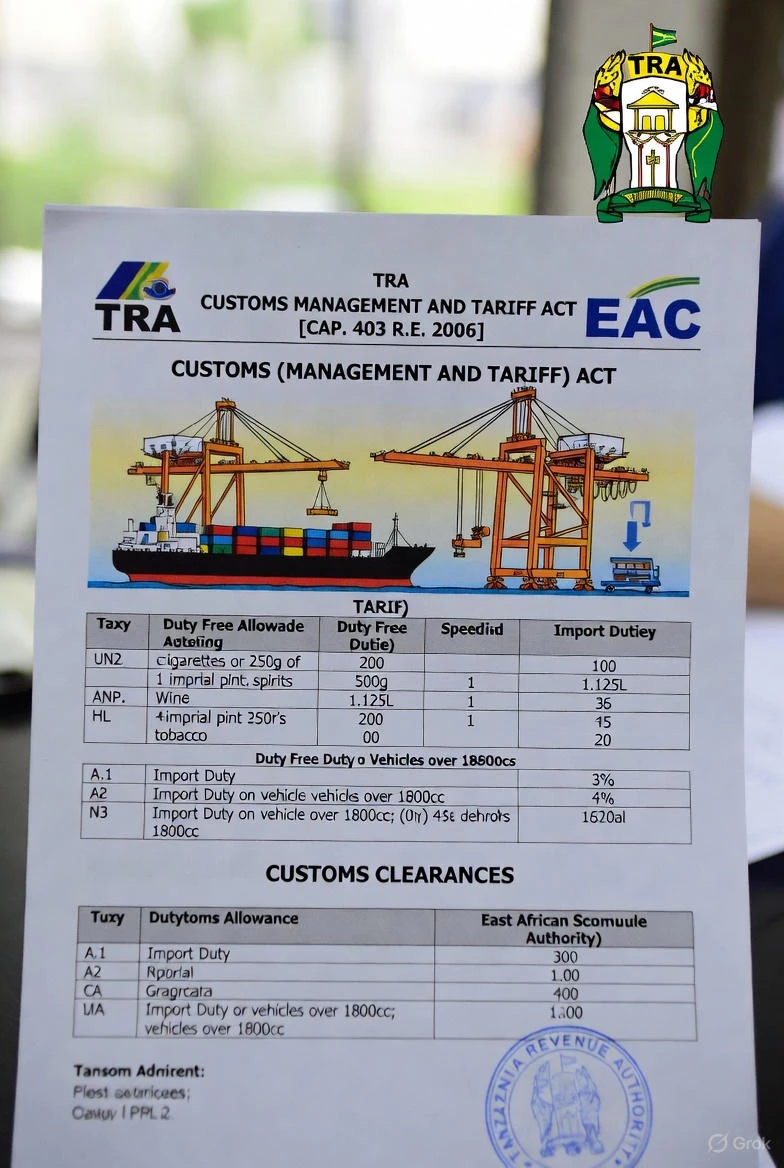
Customs Clearance Fees in Tanzania
Starting or expanding a business in Tanzania means engaging with international trade, and the gateway to this is customs clearance.
Whether you're importing machinery, raw materials, or finished goods, understanding the structure of Customs Clearance Fees in Tanzania is non-negotiable for financial predictability and compliance.
A lack of clarity can lead to costly delays, penalties, and unexpected expenses that derail your business plan.
This comprehensive guide breaks down the core components of Tanzanian customs fees and shows you how proper business setup is the foundation of smooth import/export operations.
Deciphering the Core Components of Customs Clearance Fees
The total cost of clearing goods at a Tanzanian port or border is an aggregation of several charges levied by the Tanzania Revenue Authority (TRA) and other government agencies.
These fees are generally calculated based on the Cost, Insurance, and Freight (CIF) value of the imported goods.
Key Fee Categories:
Import Duty: This is the primary revenue-generating tax on imported goods. Tanzania, as a member of the East African Community (EAC) and SADC, adheres to a Common External Tariff (CET), which typically applies rates like 0% (raw materials), 10% (intermediate goods), and 25% (finished goods).
The specific rate depends entirely on the Harmonized System (HS) Code of your product, making accurate classification crucial. Value Added Tax (VAT): Standard VAT in Tanzania is currently 18%.
This tax is applied to the sum of the CIF value plus any Import Duty and Excise Duty already charged. Certain strategic imports, like agricultural inputs or pharmaceuticals, may be zero-rated or exempt, providing an important cost-saving opportunity. Excise Duty: Applied to specific goods, often considered luxury items or goods requiring consumption control (e.g., alcoholic beverages, tobacco products, soft drinks, and some motor vehicles). This is charged before VAT and adds significantly to the final cost of these specific items.
Other Levies and Fees: These include, but are not limited to:
Railway Development Levy (RDL): Often charged as a small percentage of the CIF value to fund infrastructure projects.
External Payment Arrears (EPA) Levy: A specific charge applicable to certain transactions.
Verification/Inspection Fees: Charges for the mandated Pre-shipment Verification of Conformity (PVOC) or physical inspection processes, adding administrative cost and potential delays.
Customs Agent Fees: The professional fee charged by licensed clearing and forwarding agents for processing documentation and managing logistics—a necessary operational cost.
The sheer number of variables—from HS Codes to ever-changing legislation—underscores why professional assistance is paramount for accurate calculation and compliance.
The Critical Link: Business Structure and Customs Compliance
Before you can even begin the customs process, your business must be legally registered and compliant in Tanzania. The type of entity you establish dictates your tax obligations, regulatory framework, and ultimately, your customs documentation requirements. Establishing the right structure simplifies the import process and ensures you are positioned to utilize any available tax benefits or exemptions.
1. The Operational Choice: Private Limited Company (PLC)
Most international businesses opt for a Private Limited Company structure. A PLC is a distinct legal entity, separating the business's liabilities (including customs-related debts or penalties) from its owners.
Learn more about establishing a
2. Global Presence: Branch or Foreign Subsidiary
For multinational corporations, entering Tanzania often means establishing a Branch or Foreign Subsidiary.
Explore setting up a
3. Local Business Entry: Partnerships and Sole Proprietorships
Smaller-scale importers or local traders may operate as Partnerships and Sole Proprietorships in Tanzania.
Understand the requirements for
4. Strategic Investment: Investment Companies (TIC)
Businesses making significant capital investments, particularly in manufacturing, agriculture, or infrastructure, should register as Investment Companies (TIC).
The Tanzania Investment Centre (TIC) grants Certificates of Incentives that can provide crucial customs and tax exemptions, particularly on imported capital goods like machinery and equipment. Utilizing these incentives drastically reduces the initial capital outlay by lowering the payable Import Duty and VAT, making the initial investment more viable. This is the single most effective way to legally minimize customs clearance costs for strategic investors.
Find out more about
Strategies for Optimizing Customs Clearance Costs and Ensuring Compliance
Beyond securing the right business structure, effective cost management in customs clearance hinges on preparation and accuracy.
1. Accurate HS Code Classification
Misclassification is the leading cause of penalties and delays. A slight error in the Harmonized System (HS) Code can lead to paying a 25% duty instead of a 0% or 10% duty, or worse, incurring a fine. Partnering with a skilled customs agent ensures the correct code is used, aligning the declared goods with the legal tariff structure and preventing compliance risk.
2. Leveraging Import/Export Regimes
Tanzania offers various customs regimes designed to support specific types of trade. These include:
Manufacturing Under Bond (MUB): Allows manufacturers to import raw materials duty-free for processing, provided the finished goods are then exported.
Bonded Warehousing: Allows importers to store goods without paying duty immediately, only paying the applicable fees when the goods are withdrawn from the bond for local consumption.
Utilizing these regimes legally defers or cancels the duty liability, dramatically improving the importing company’s cash flow and cost structure.
3. Documentation and Valuation
The declared value of goods (CIF) is the basis for all duty calculations. Ensure that all commercial invoices, packing lists, Bills of Lading (B/L), and Certificates of Origin are accurate, consistent, and readily available. Inaccurate documentation is a direct route to physical inspection, which incurs extra fees and leads to significant cargo dwell time and demurrage charges.
The Final Piece of the Puzzle: Operating Your Tanzanian Entity
Once your company is registered and your goods are cleared, you require a physical and operational presence to fulfill your legal and logistical requirements.
Having a registered physical address is a mandatory requirement for business registration and ongoing compliance in Tanzania.
Secure your required operational base with
Conclusion: Partnering for Seamless Trade
Navigating Customs Clearance Fees in Tanzania is a complex yet manageable process.
By establishing the correct legal entity—be it a Private Limited Company, a Foreign Subsidiary, or utilizing the incentives of a TIC Investment Company—and adhering to stringent documentation and classification standards, businesses can ensure compliance and optimize their expenditure. Do not let complex tariffs and regulatory hurdles slow down your entry into one of East Africa’s fastest-growing markets. Partner with experts who specialize in Tanzanian business law, investment incentives, and customs procedures to ensure a swift, compliant, and cost-effective operational start.
Ready to start your compliant import operations or set up your business in Tanzania?
Contact our business setup and customs advisory team today!

Company Formation Services in Tanzania

Guide to Establishing a Private Limited Company in Tanzania

Branch or Foreign Subsidiary in Tanzania

Partnerships and Sole Proprietorships in Tanzania Guide

Investment Companies (TIC) in Tanzania
Latest Posts




Ready to start your project? Request your service and begin your journey with us!

International Expert Mohammed bin Rashid bin Adwan